
Revolutionising Membrane Protein Research
Nanosene’s polymer technology enables stable, functional membrane proteins for faster, more reliable drug discovery.
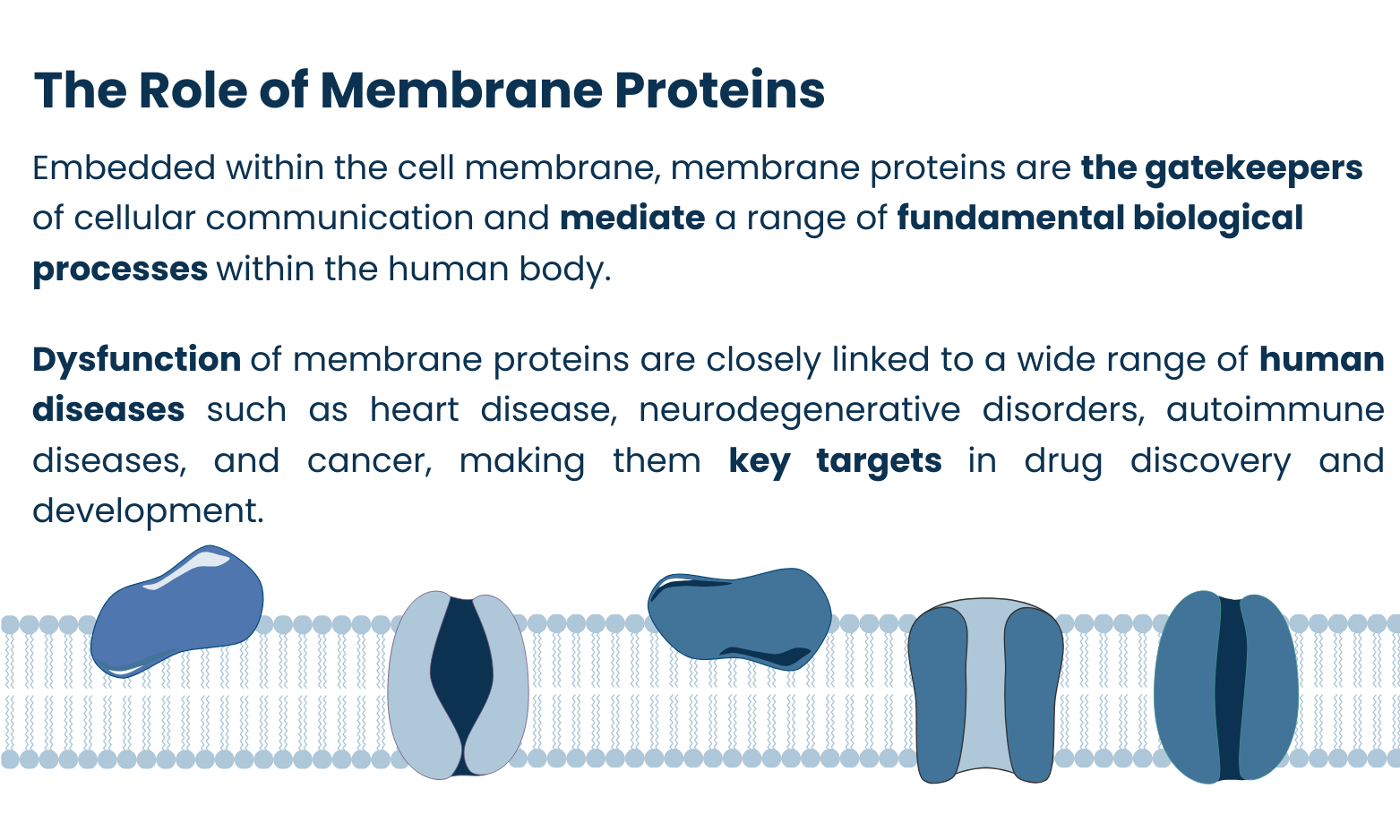
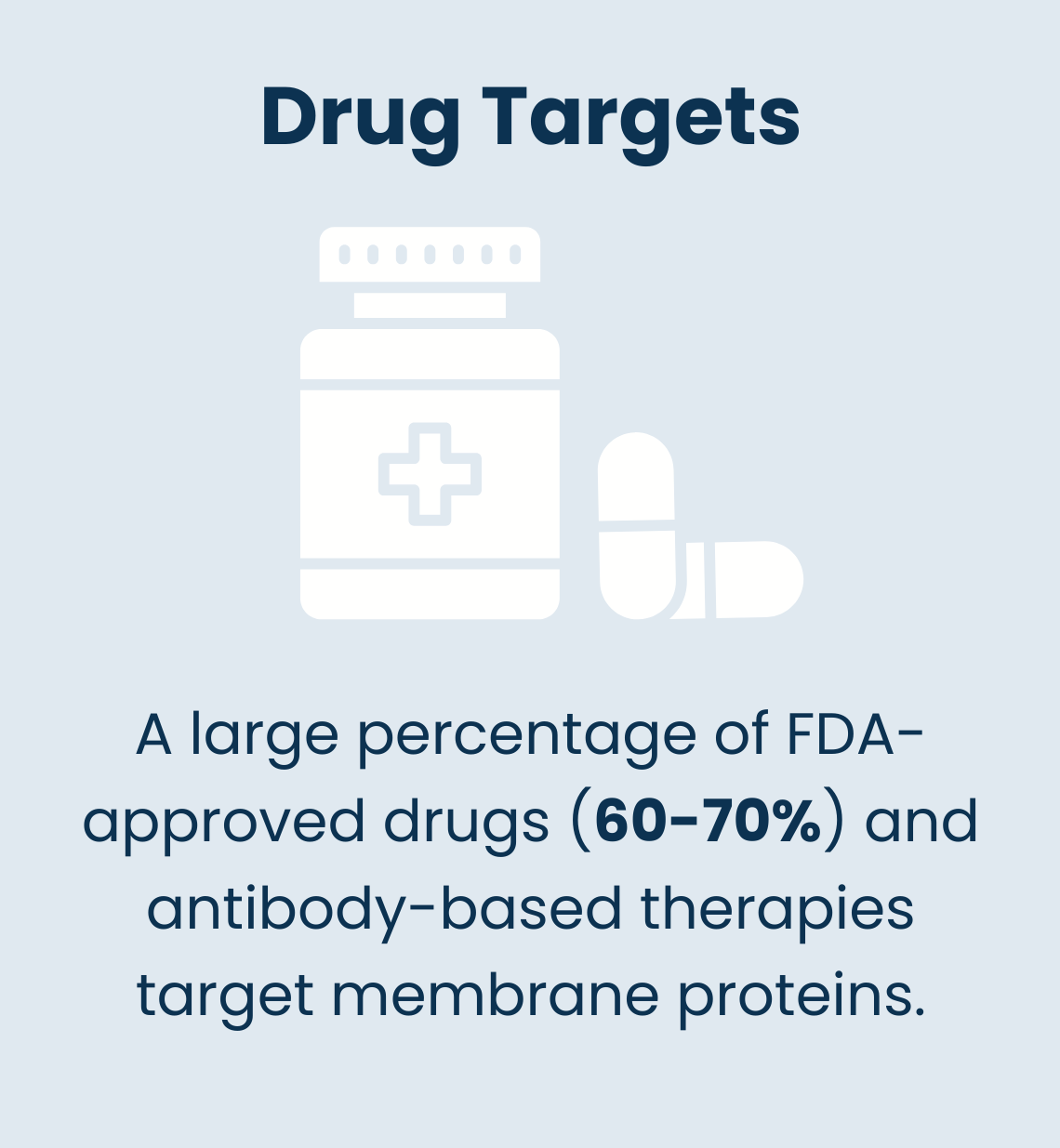
Why are Membrane Proteins Key to Drug Development?
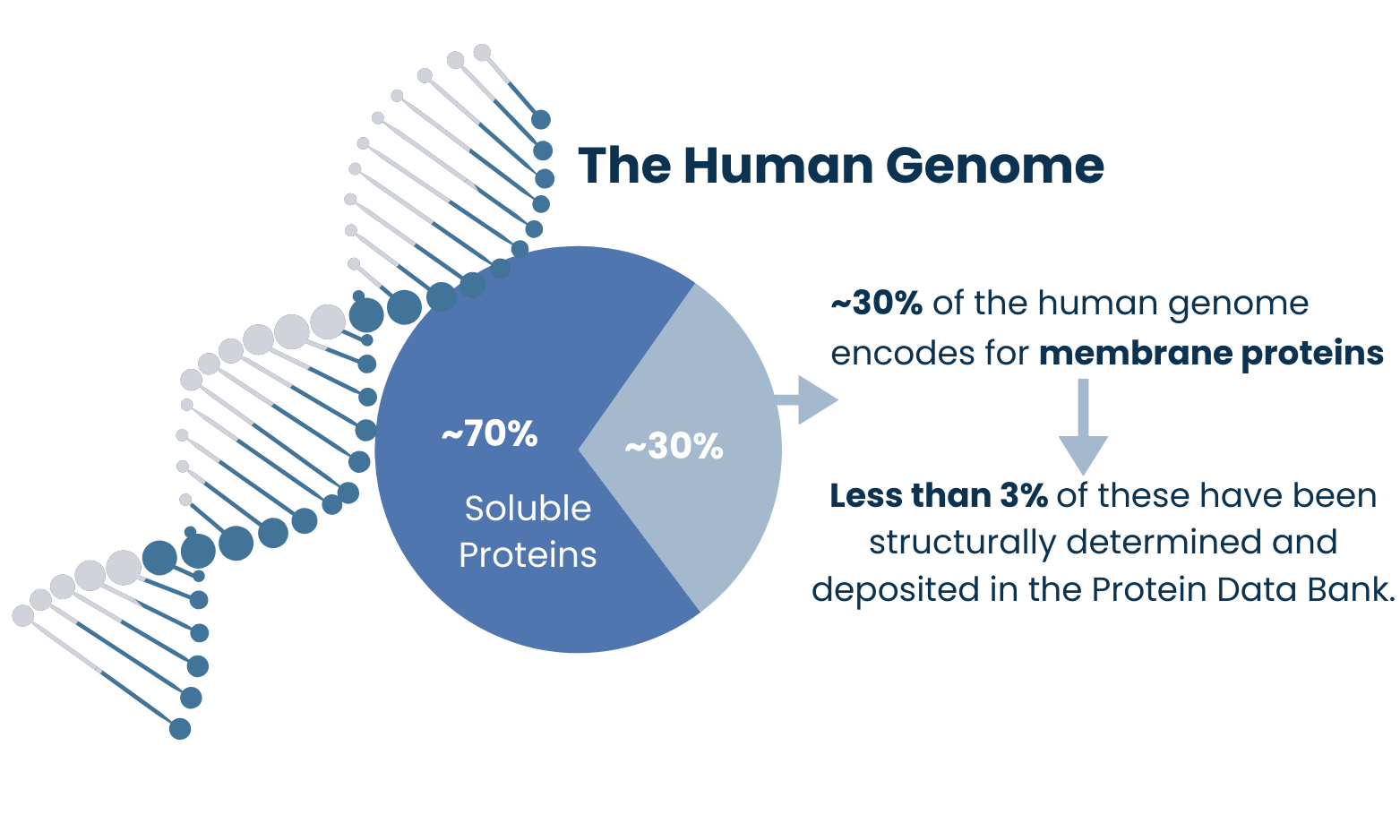
The Membrane Protein Challenge
Despite their central role in human health, membrane proteins remain among the most difficult biomolecules to study. Their complexity and reliance on the surrounding lipid environment make them difficult to express, extract, and preserve in functional form. As a result, researchers often lack reliable tools to study these critical targets, creating bottlenecks in drug discovery pipelines and delaying the development of new therapies.
The Core MP Challenges:
Amphipathic & fragile by nature: With both hydrophilic and hydrophobic regions, once removed from the protective environment of the membrane, they can rapidly unfold and lose structural stability.
Lipid-dependent structure: Their structure and function rely on the lipid environment that is often stripped away by detergents, leading to loss of activity.
Low abundance & structural complexity: Membrane proteins are naturally scarce, difficult to overexpress, and possess intricate multi-pass architectures. These factors make large-scale study, especially for structural and functional analysis, exceptionally challenging.
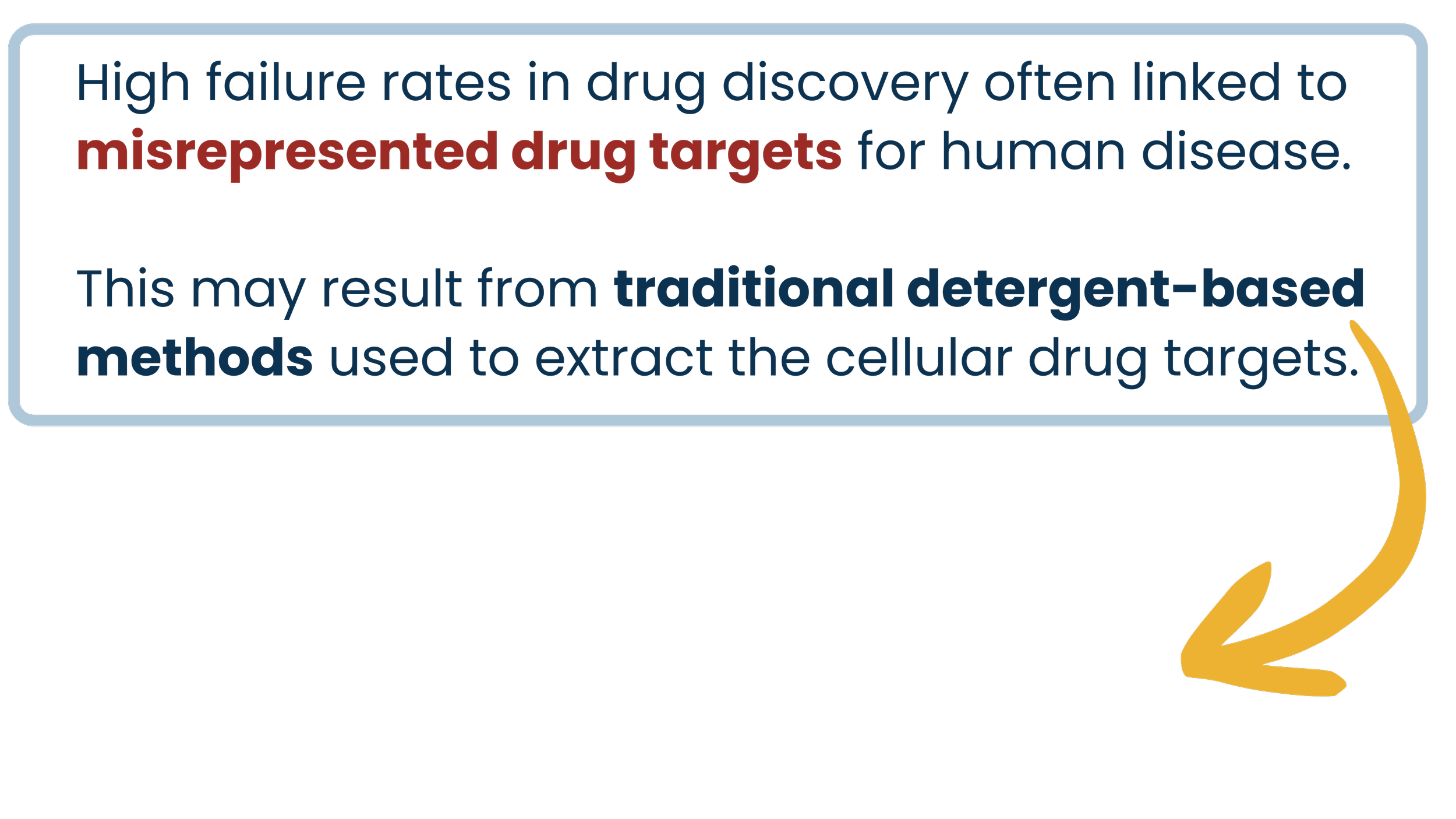
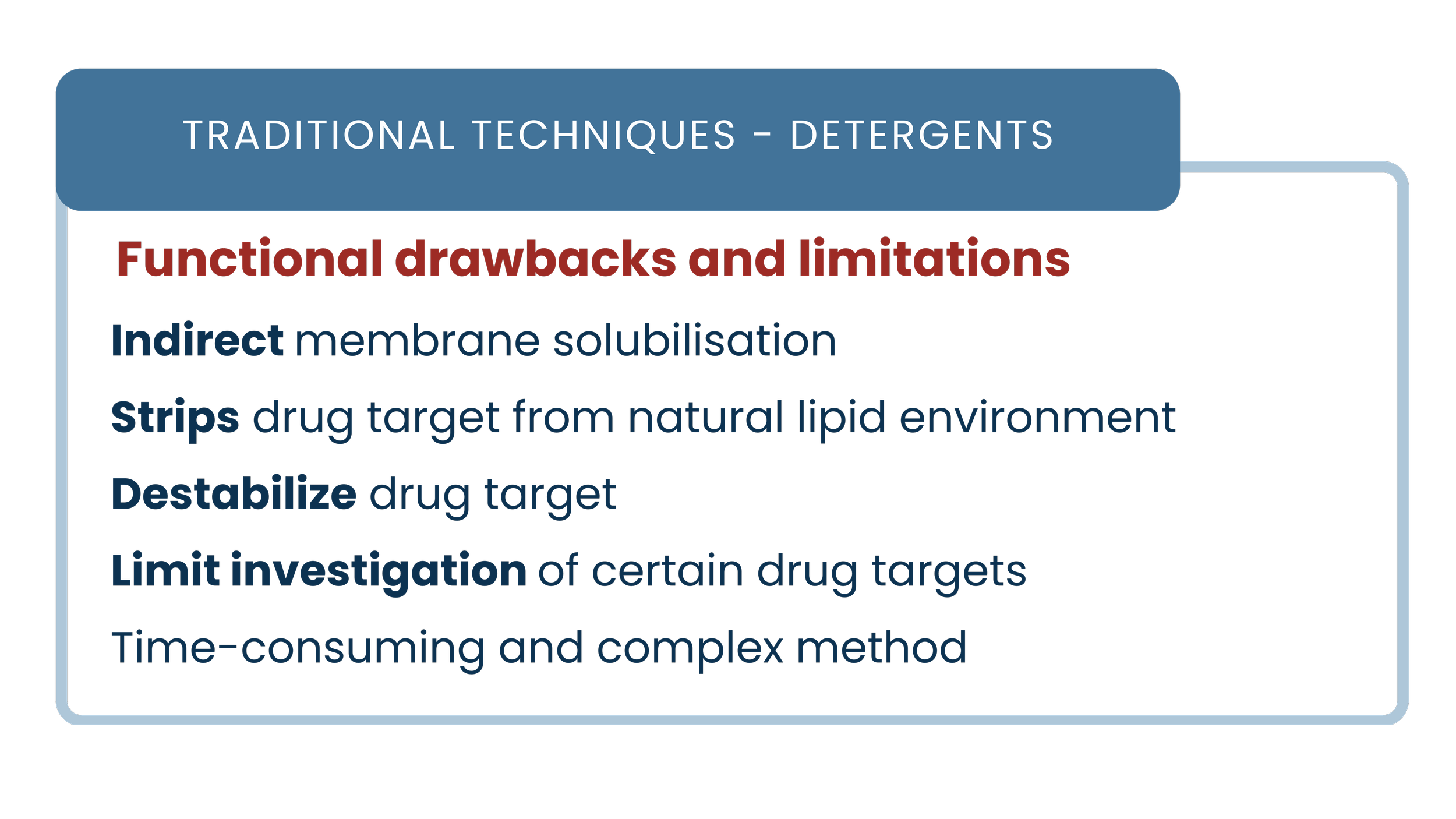
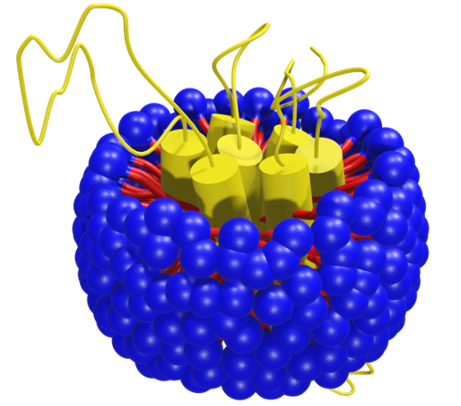
Protein in Non-Native Detergent Micelle
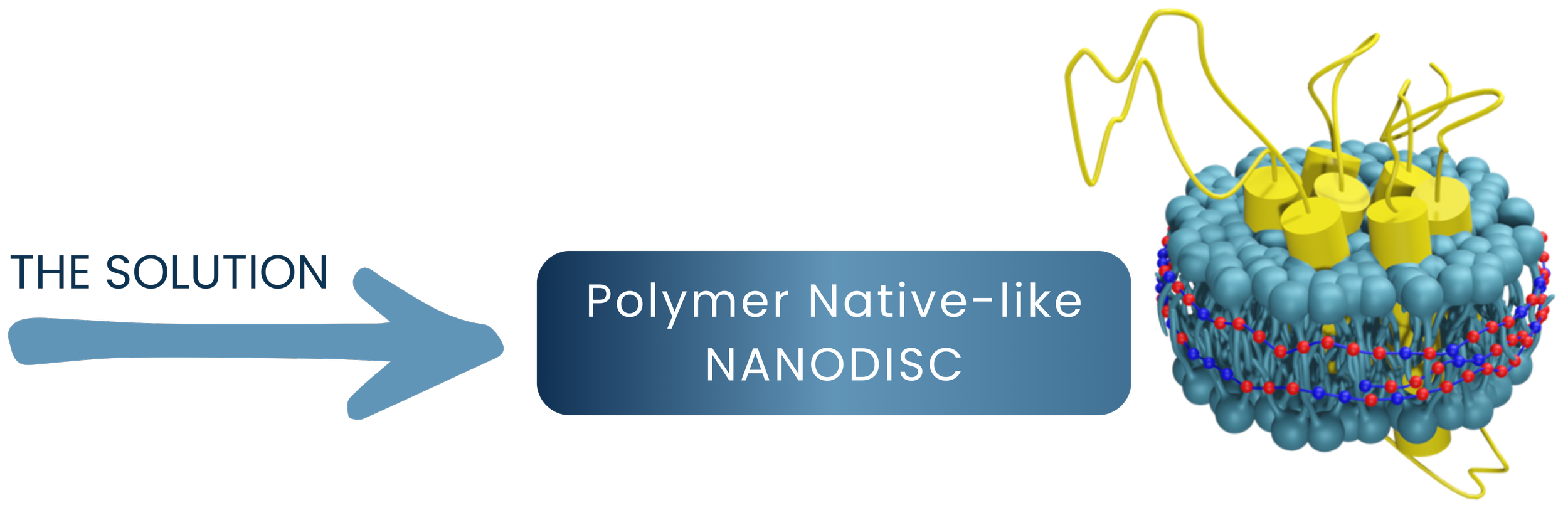
The polymer nanodisc technology maintains these proteins in a detergent-free, native-like environment, enabling reliable structural and functional studies that were difficult or even impossible for many targets just a decade ago.
The Nanosene Solution
Patented polymer nanodisc technology for detergent-free membrane protein isolation.
Next-Generation Polymer Nanodiscs
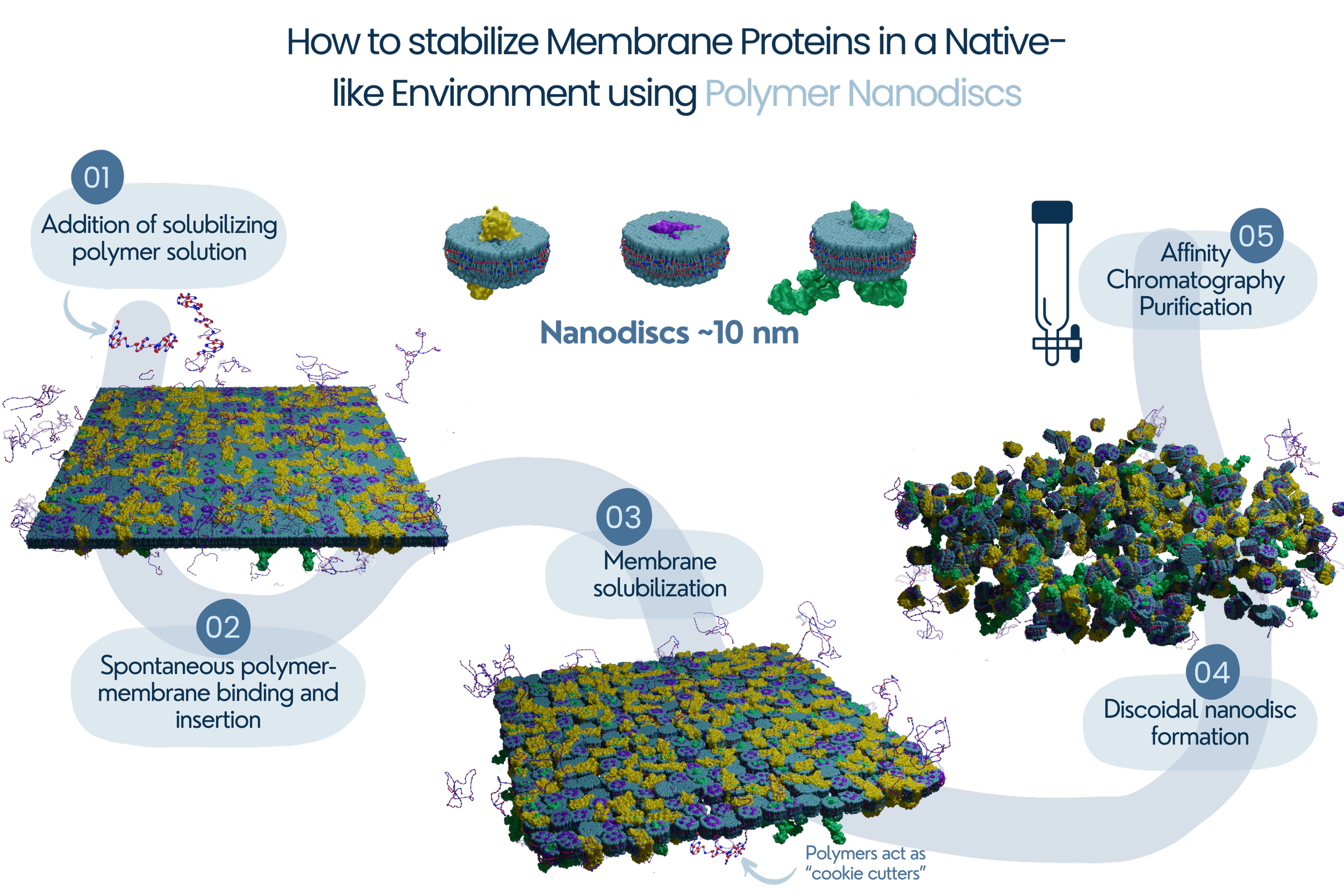
Nanosene’s custom-designed polymers directly solubilise membrane proteins into stable nanoscale discs, preserving structure, activity, and function.
Produced through controlled polymerization techniques, our technology outperforms traditional detergents in stability, efficiency, and ease of use.

Direct extraction and solubilisation of drug target
Preserve near-native lipid environment
Results in highly stable drug targets - protein functionality intact
Faster and simpler protocol for protein purification
More successful drug target identification
Accelerate & improve drug development
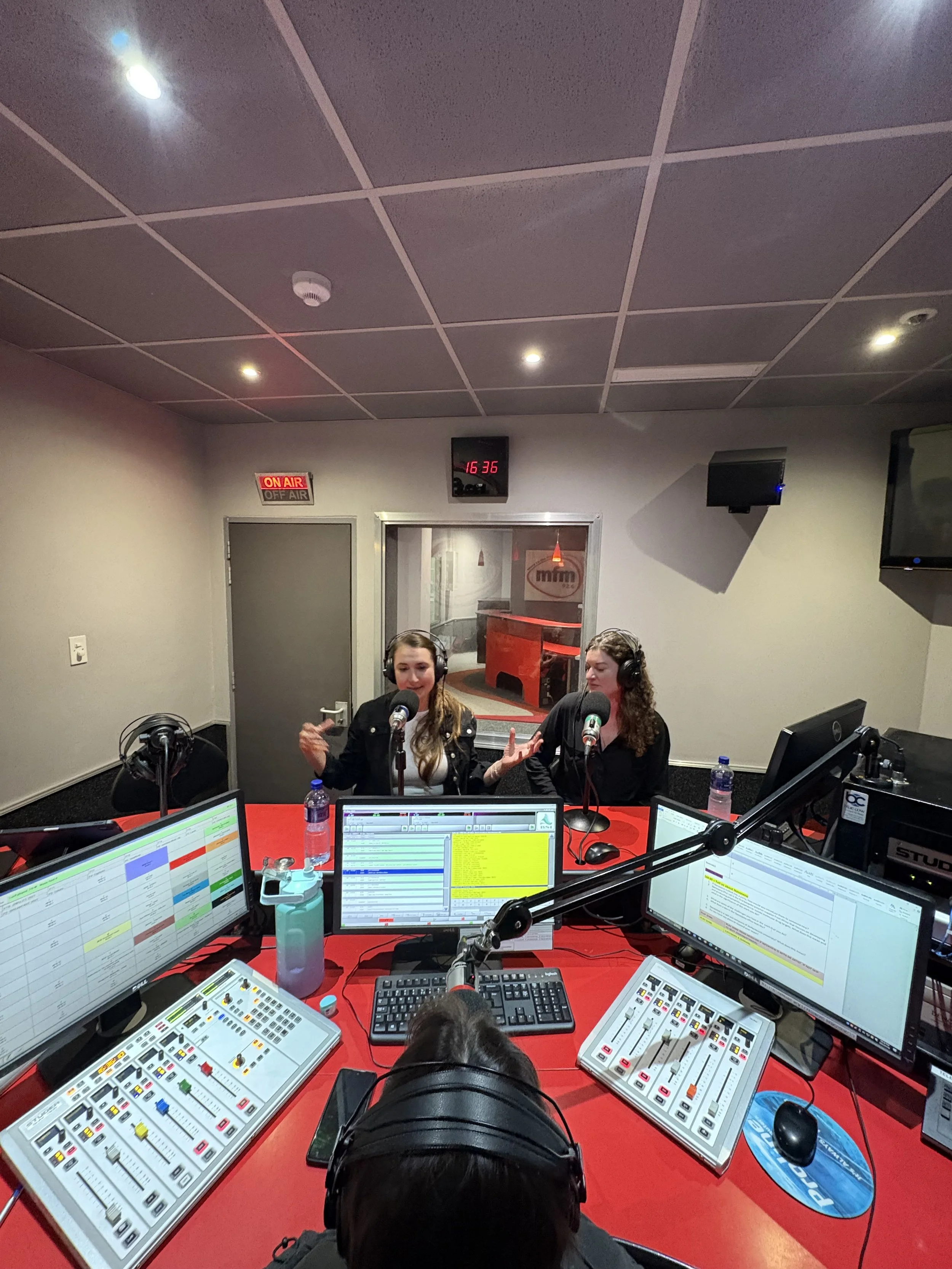
MFM Radio sat down with our team to talk about biotech entrepreneurship, solving hard scientific problems in South Africa, and the future of Nanosene.
In the Media: Nanosene’s Journey
Listen Below

Detergent Free Solution
Hear Prof. Bert Klumperman talk about the 2nd generation of SMA copolymers
“We introduced a third monomer to fine-tune the amphiphilic balance, allowing for more control, better protein extraction, and broader applicability. It’s a true second generation of nanodisc technology.”
— Prof. Bert Klumperman
Enabling Breakthroughs in Membrane Protein Research
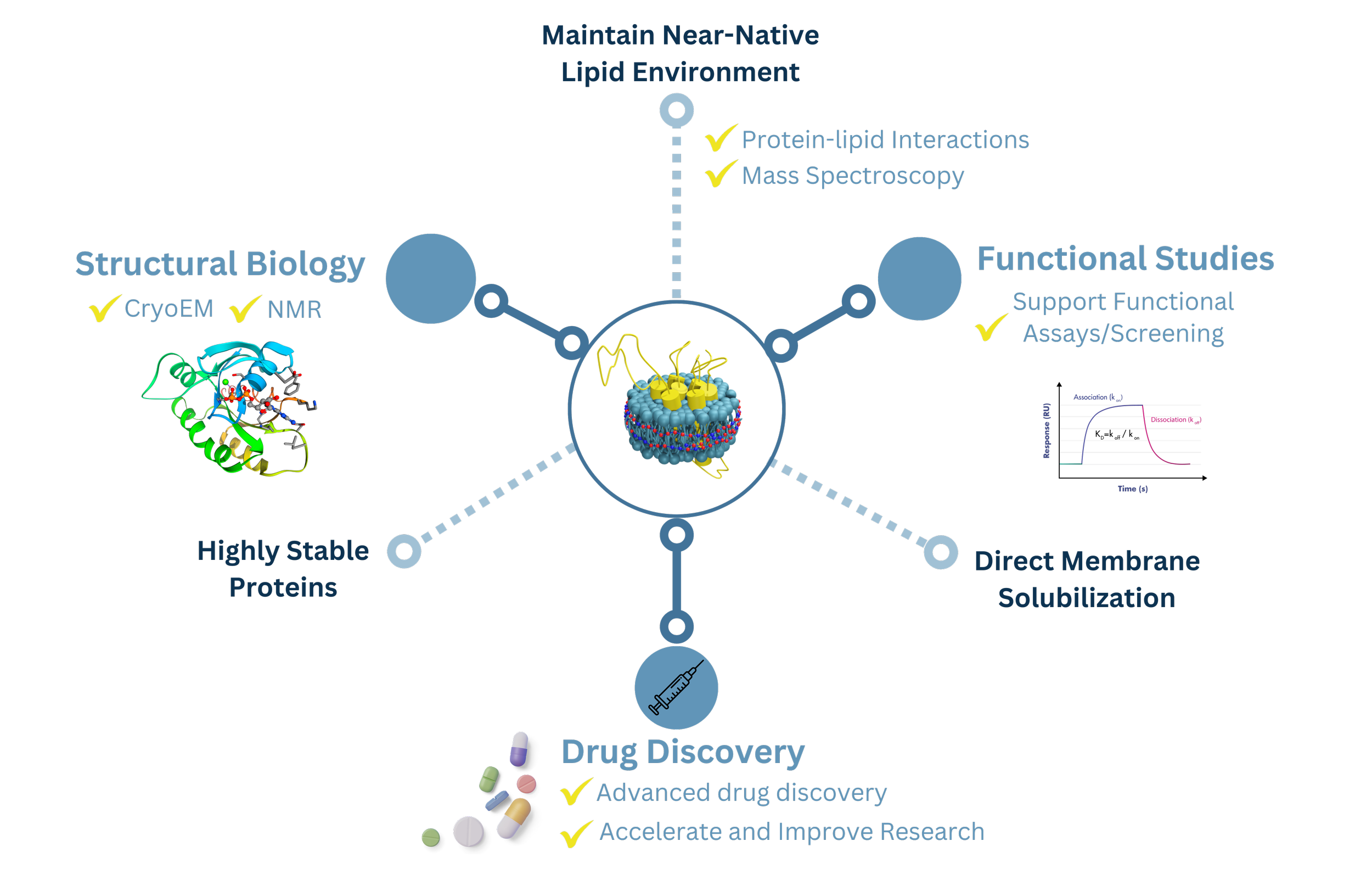
| Application | Description |
|---|---|
| Structural Biology (CryoEM/NMR) | Nanodiscs stabilize membrane proteins in native-like environments, ideal for high-resolution structure determination via CryoEM and NMR. |
| Maintain Near-Native Lipid Environment | Preserve native lipid-protein interactions critical for understanding biological function and drug binding. |
| Functional Studies | Nanodiscs enable real-time functional assays and screening without protein denaturation. |
| Direct Membrane Solubilisation | Skip harsh detergents: directly extract membrane proteins from cells using our BzAM polymers. |
| Drug Discovery | Access stable, functional proteins for ligand screening, antibody discovery, and structure-based drug design. |
| Highly Stable Proteins | Improve protein yield and stability, enabling downstream success in structural and functional studies. |